Brook Hill

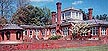
The mansion is set in a handsomely landscaped park which seems detached both geographically and temporally from the 20th century commercial development that surrounds it in Richmond's Northside. Among the early outbuildings is an architecturally noteworthy carriage house built in 1859 of the same bricks used in the construction of nearby Emmanuel Episcopal Church. The family cemetery is enclosed with a Gothic-style cast iron fence; the earliest stone dates to 1811. A slave cemetery also rests on the property. Brook Hill has remained in the same family since the early 18th century, and the lives of it's owners, the Williamsons, Stewarts and Bryans, have been closely interwoven with the history of Richmond and Henrico County over the past 200 years. During the course of the War Between the States, most of the leaders of the Confederacy were entertained here.

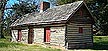
"Brook Hill, with its profusion of bays, verandas and eclectic ornamentation is a house unparalleled in Virginia. The house in its present form dates largely to the 1850's and "60s, being a curious blend of Gothic Revival and Italianate elements. The original 18th-century house is somewhere within the walls of the present structure, but there is no visible architectural evidence to confirm this tradition. The mid-19th-century interiors which are even more richly varied than the exterior of the house, remain largely intact....." Inventory of Early Architecture County of Henrico, Virginia, Compiled and edited with introduction by Christopher M Gregson. Also on this property is the Brook Road Tollhouse, probably the only surviving building of its type in central Virginia. The original toll keeper's house, a one story structure, was erected between 1825-40.
Below are pictures of the family cemetery:


Below are pictures of the slave cemetery:


- Privately owned
- (Photos supplied by Mr. Welford Lloyd Williams; Inventory of Early Architecture County of Henrico, Virginia)
>Back to Top<
Enerdale

Dr. John Friend (1826-1889) erected Enerdale farmhouse in 1850-52. He married a Miss Barker, daughter of the man responsible for manufacturing the popular "Dr. Barker" line of tonics and liniments.
Dr. Friend, who graduated from the Virginia Medical College in 1850, practiced as a physician in Richmond and surrounding Henrico County until his death in 1889.


>Back to Top<
The History of Fair Oaks Elementary School
Thank you to the Government of Henrico County for sharing the information about Fair Oaks Elementary School.
The Founding of Fair Oaks School for African-American Children
In 1919, the Richmond Times Dispatch reported in its August 24th edition about a new "High-Class Colored Subdivision at Fair Oaks" with local lots to be sold..
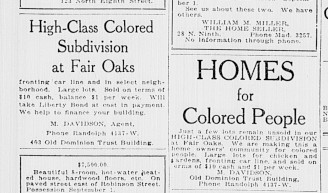
A new African-American community would need a new school to teach the the children living in this new neighorhood. This school would be Fair Oaks School.
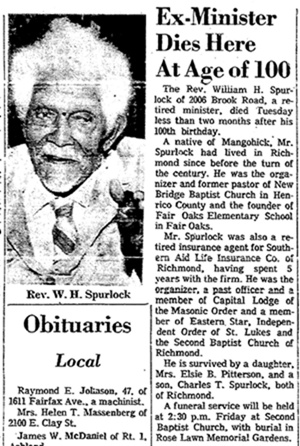
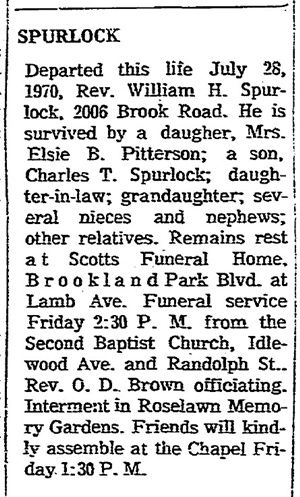
Reverend William H. Spurlock was the founder of the Fair Oaks School. He died at the age of 100 years in 1970. Below are two obituaries for Reverend Spurlock.
Fair Oaks School: It Began as a Four Room Building, 1920s
Fair Oaks School for African-American children was built with funds from the Government of Henrico County and the generosity of Julius Rosenwald.
Wikipedia notes that "Julius Rosenwald was a Jewish American business executive and philanthropist. He was the long-time president and an owner of Sears, Roebuck and Company, a large and successful Chicago-based national retailer in the early 20th century. His Rosenwald Fund donated millions in matching funds to promote Black American education."
Although Rosenwald died in 1932, his Rosenwald Fund provided funds to African-American projects, including the Fair Oaks School, from 1917-1948. The collection's records and photographs are archived and managed by Fisk University, one of America's Historically Black Colleges and Universities (HBCU). Fisk University is located in Nashville, TN.
Below is the Rosenwald card for Fair Oaks School from the Fisk's Rosenwald Collection.
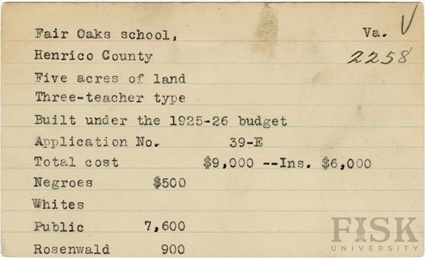
The new Fair Oaks School opened in 1926.
A photo of the first four room school is featured in a book called "African Americans of Henrico County" by Dabney Nichols. It appears on page 11. The school appears in a background photo. Due to copyright laws, we are unable to share this photo.
From: An Oral History Account of Fair Oaks PDF
Below was first noted in the 1926-1927 Superintendent's Report Grades 1-6.
Four room building was constructed of wood w/ entry area which had closets. (coats). Inner doors opened, allowing all classrooms to come together for assemblies (other activities).
According to Elizabeth Sampson Johnson, in 1930, teachers were assigned two classes each. Students were taught arithmetic, reading, writing, sewing, some cooking (and a little business - writing checks).
Fuel for the stove was provided by the county, students/parents made fire, water (pump) from well in the yeard, outside toilets were used, and students/teachers cleaned rooms.
Pupils brought lunches or went home for lunch in the hour (12:00-1:00) that was allowed.
Fair Oaks School: Slices of Life from 1930s-1940s
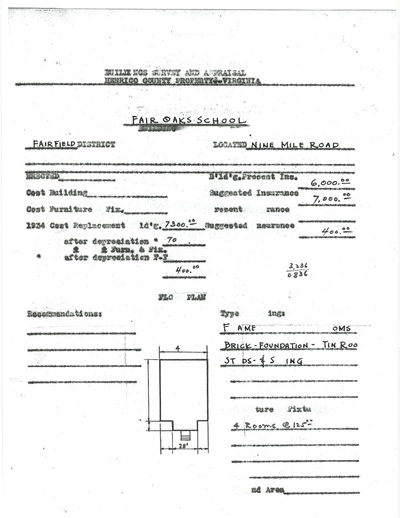
In 1934, architect Edward F. Sinnott created a building servey of Fair Oaks School. Click on the image to see the enlarged version of the survey.
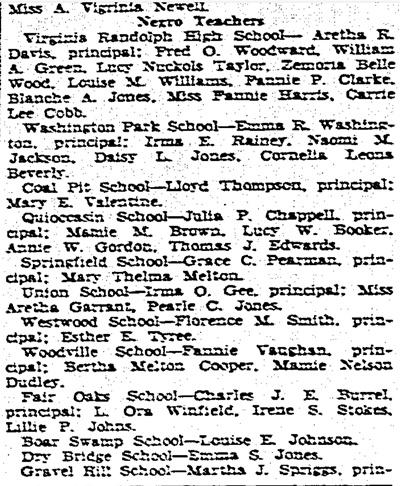
Also in 1934, the Richmond Times Dispatch published the list of faculty of Fair Oaks in its August 25th edition, as seen in the image below.
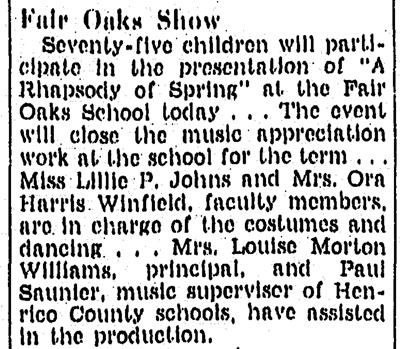
In 1937, the Richmond Times Dispatch reported in its May 11th edition about students participating in a musical appreciation show called "Rhapsody of Spring" at Fair Oaks School. The article appears below.
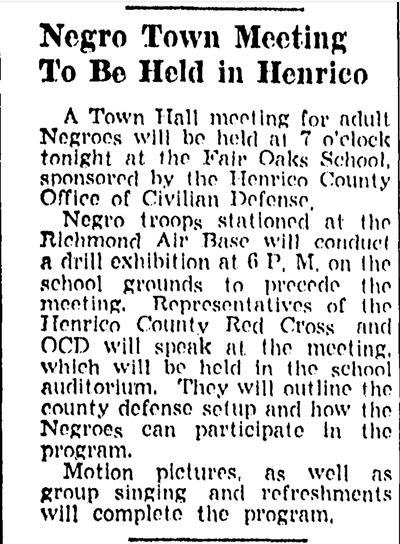
In 1942, the Richmond Times Dispatch announced in its November 17th edition about a town hall meeting for African-Americans, which was held at the Fair Oaks School. African-American troops conducted a drill exhibition. Red Cross and Civilian Defense representatives discussed Henrico County's defense setup and how community members could participate in the program.
Fair Oaks Elementary School Brick Replacement, 1950s
From: An Oral History Account of Fair Oaks PDF
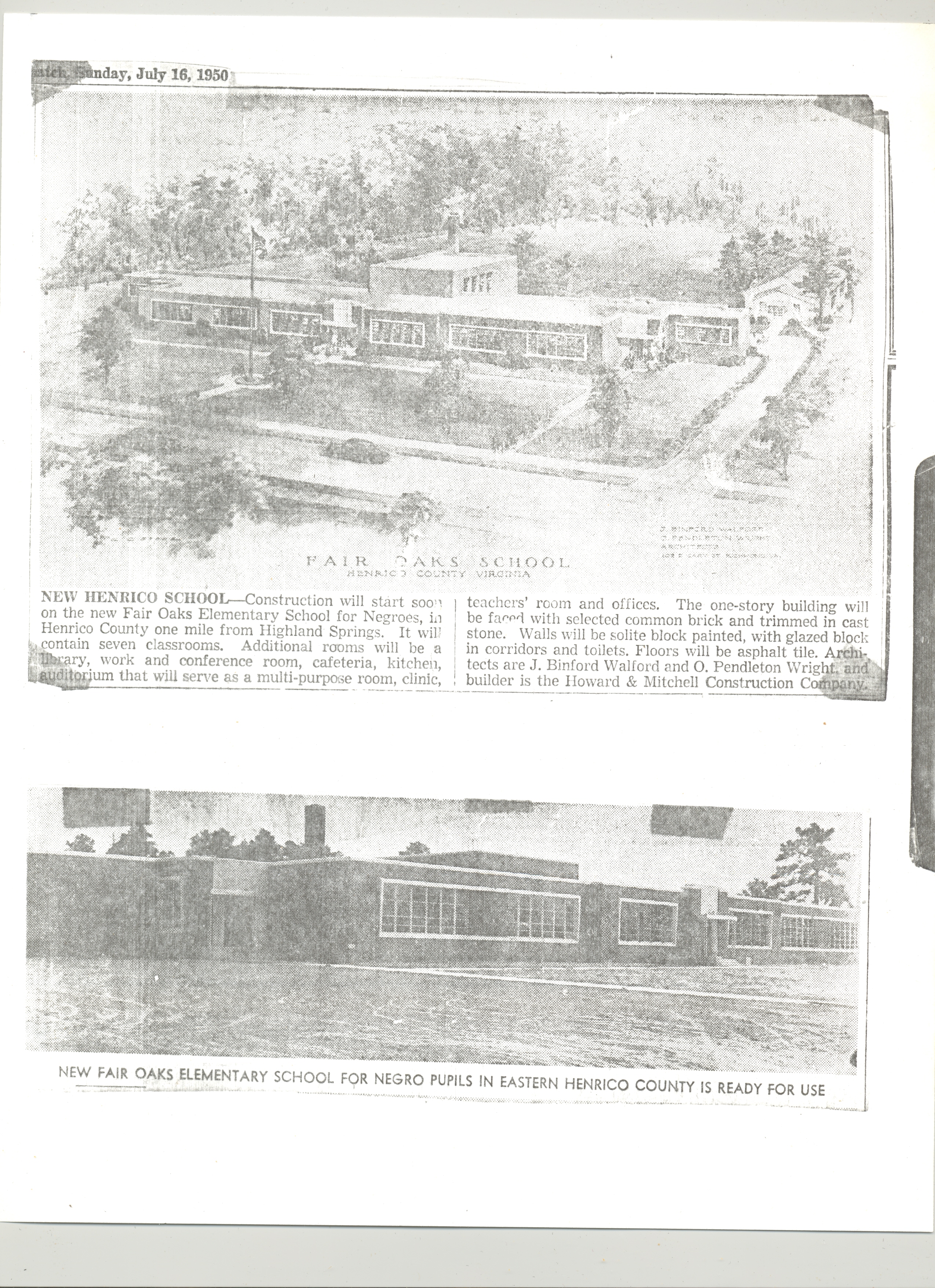
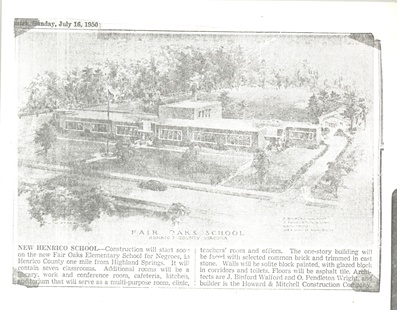
In the July 16, 1950 edition of the Richmond Times Dispatch, an article called "NEW HENRICO SCHOOL" reported the following:
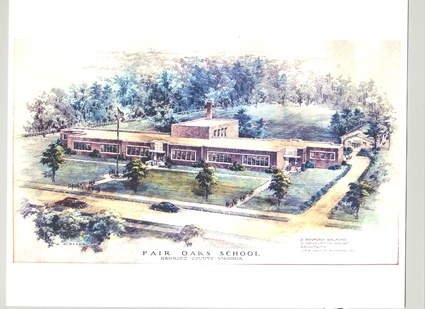
"Construction will start soon on the new Fair Oaks Elementary School for Negroes, in Henrico County one mile from Highland Springs. It will contain seven classrooms. Additional rooms will be a library, work and conference room, cafeteria, kitchen, auditorium that will serve as a multi-purpose room, clinic, teachers' room and offices. The one-story building will be faced with selected common brick and trimmed in cast stone. Alls will be solite block painted, with glazed block in cooridors and toilets. Floors will be asphalt tile. Architects are J. Binford Walford and O. Pendleton Wright, and builder is the Howard & Mitchell Construction Company."
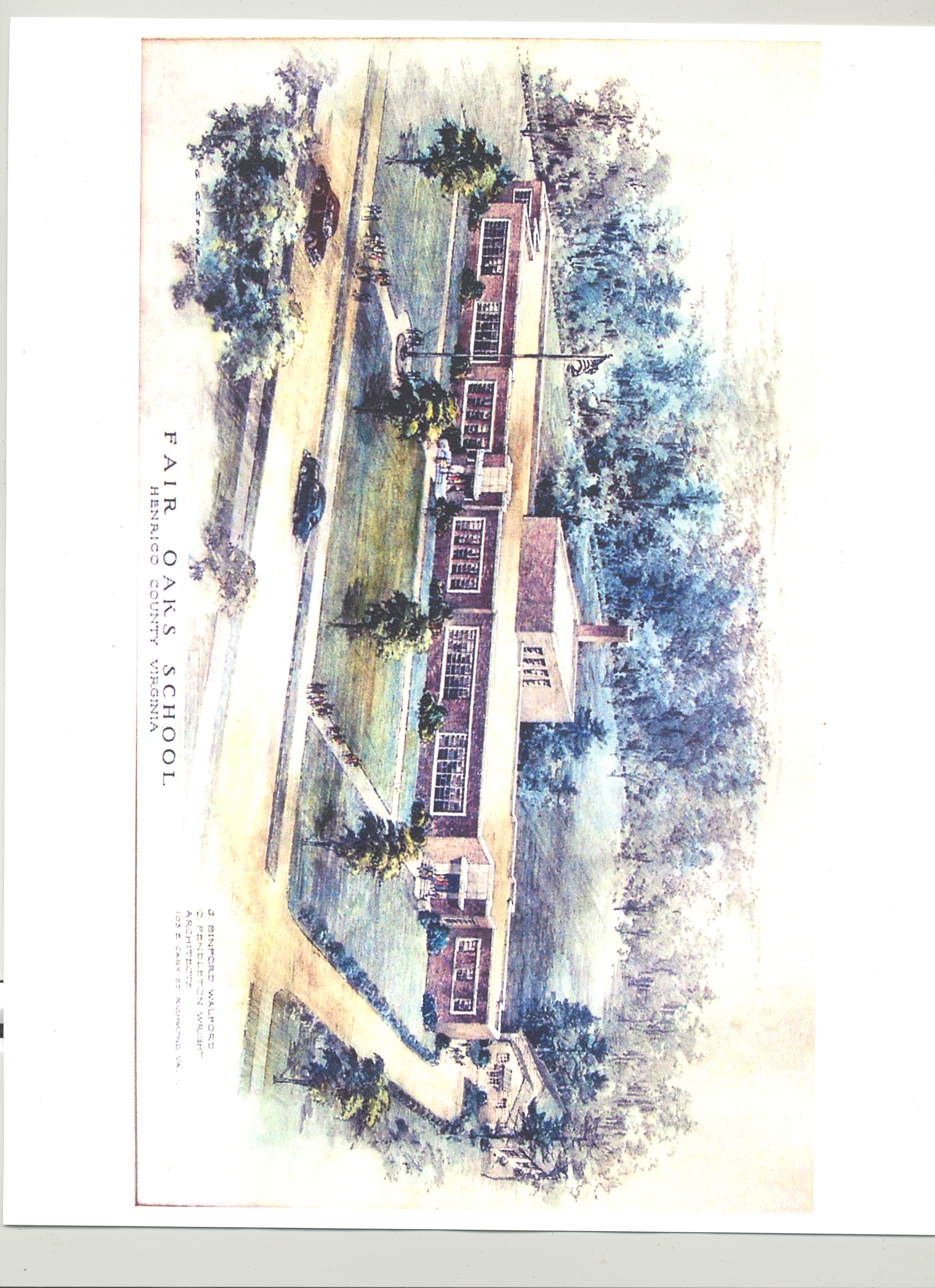
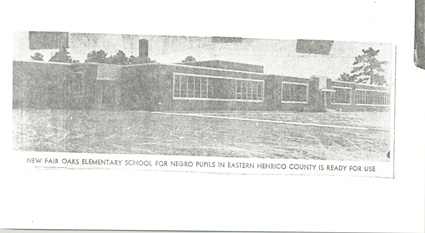
Below is an artist's rendition of what the new brick building's exterior would look like before construction was started. It's followed by the Richmond Time-Dispatch article announcing anticipated school's construction. This is followed by an image from Richmond Times-Dispatch announcing "NEW FAIR OAKS ELEMENTARY SCHOOL FOR NEGRO PUPILS IN EASTERN HENRICO IS READY FOR USE". Click on either image to see an enlarged version of it.
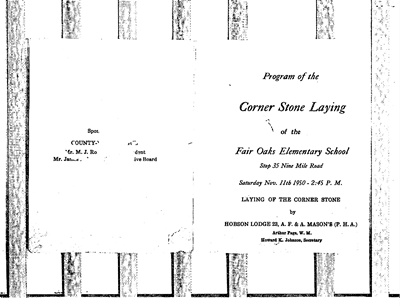
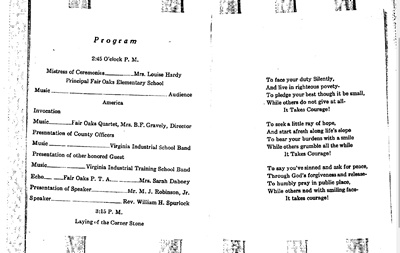
On November 11, 1950, a corner stone laying ceremony was held for the modern brick building that was to replace the original four-room schoolhouse. The corner stone was the first stone laid in the foundation for this new building.
Click on an image to see the enlarged version of pages from the corner stone laying ceremony program.
The main, central part of Fair Oaks Elementary School was built in 1950-1951. The modern brick building was in a basic T-design which provided space for a library, cafeteria, an auditorium, bathroom facilities, and comfortable classrooms.
A small addition was added later.
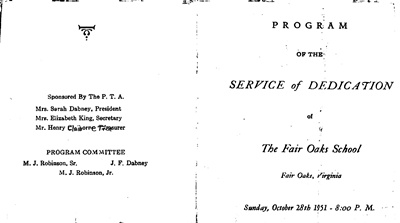
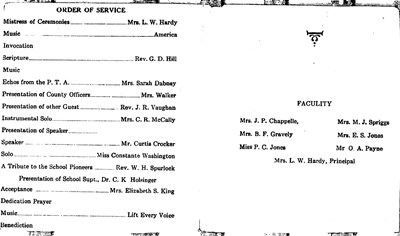
On October 28, 1951 a decidation ceremony for the completed new brick school building was held.
Click on an image to see the enlarged version of pages from the dedication ceremony program.
Fair Oaks Elementary School Integration and Building Expansion, 1960s-1970s
From: An Oral History Account of Fair Oaks PDF
Until the summer of 1969, Fair Oaks Elementary School was one of several black schools in Henrico County.
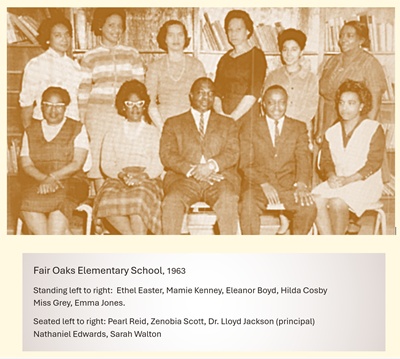
Below is a photo and list of faculty who taught at Fair Oaks Elementary School in 1963. Click on the image to enlarge it.
When "freedom of choice" failed to produce real integration, dual black and white school zones were abolished in favor of a single, non-racial zone plan for the system.
Fair Oaks was closed for the 1969-70 school year, during which time rezoning was accomplished. In the fall of 1970, the school was reopened as a regular, integrated elementary school serving the immediate georgraphical area around it, namely part of the Highland Springs Community.
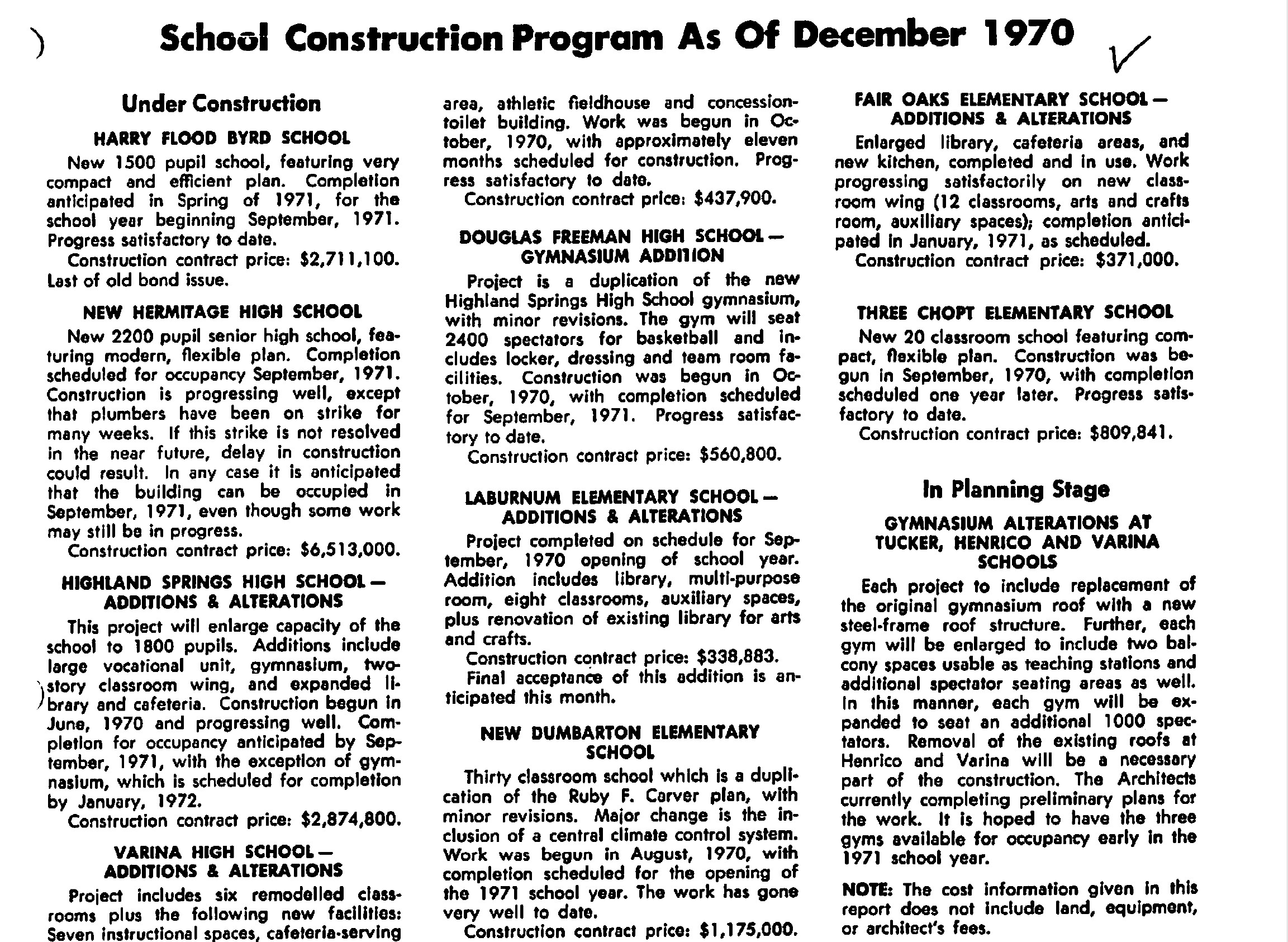
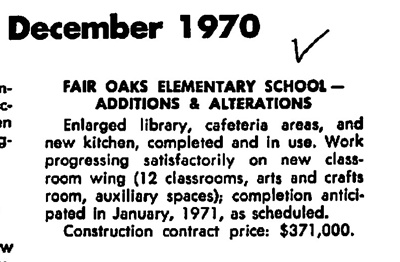
During the 1970-71 year, "additions and alterations included enlarged library, cafeteria areas, and new kitchen, completed and in use. Work progressing satisfactorily on new classroom wing (12 classrooms, arts and crafts room, auxilliary spaces); completion aniticpated in January 1971, as scheduled. Construction contract price: $371,000." Click on the image below to see the December, 1970 article announcing the School Construction Program for Fair Oaks and other schools at that time.
Fair Oaks Elementary School: Other Historical Tidbits from Its 100 Years of History
From: An Oral History Account of Fair Oaks PDF
Mrs. Louise Moor was the School's first principal. She served the longest time of any principal at Fair Oaks. Mr. Paul Wenger, the present principal, has served since 1970. He came to Fair Oaks as the first white teacher in 1966.
The faculty and staff at Fair Oaks have always been known for the friendly and open way in which they relate to each other, and to students and parents. The school has not been afraid to try valid new ideas, and has always striven for educational excellence. It is hoped that these traditions will continue indefinitely.
566 students are presently enrolled and there are 19 classroom teachers plus six special teachers on staff. Kindergarten students were added in 1974 and sixth graders started attending Fairfield Middle High in 1976.
The emblem of the schools is a chipmunk with an oak leaf. The school colors are green and white.
Future plans of the school include continuing improvement of the Individually Guided Education System, enlargement of the blacktop area, more physical education equipment. An interesting nature trail was added this year.
Students look forward each year to the Spring Festival and Field Day.
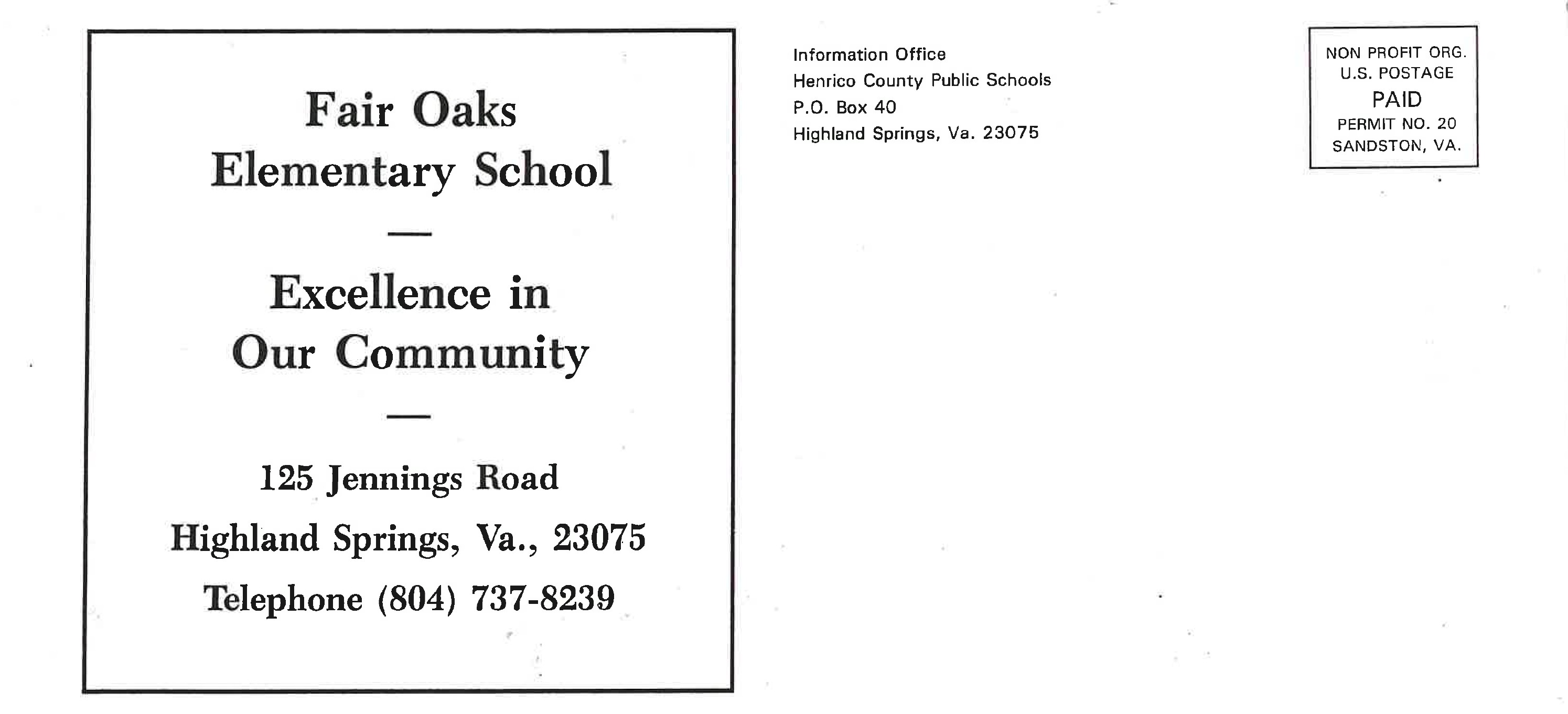
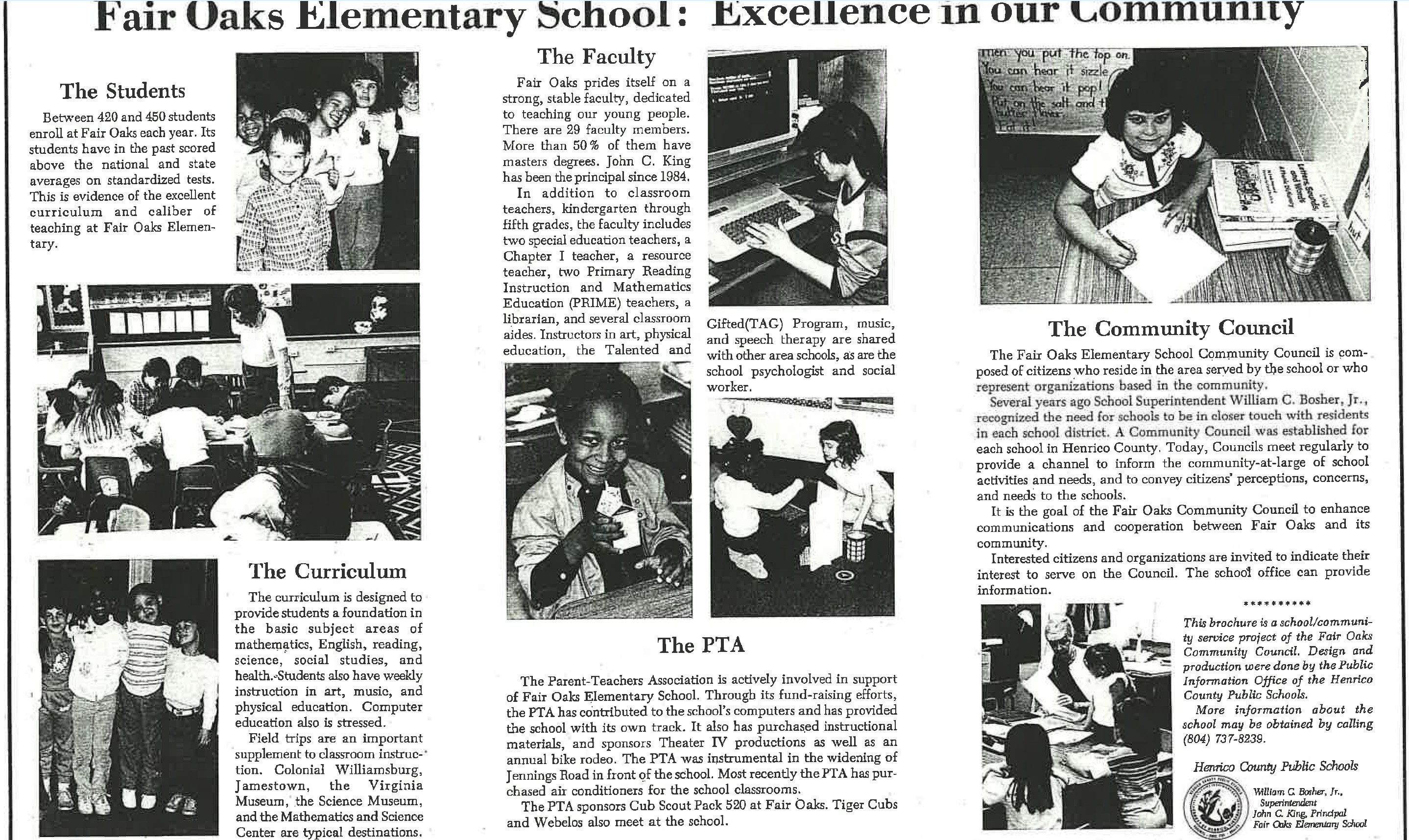
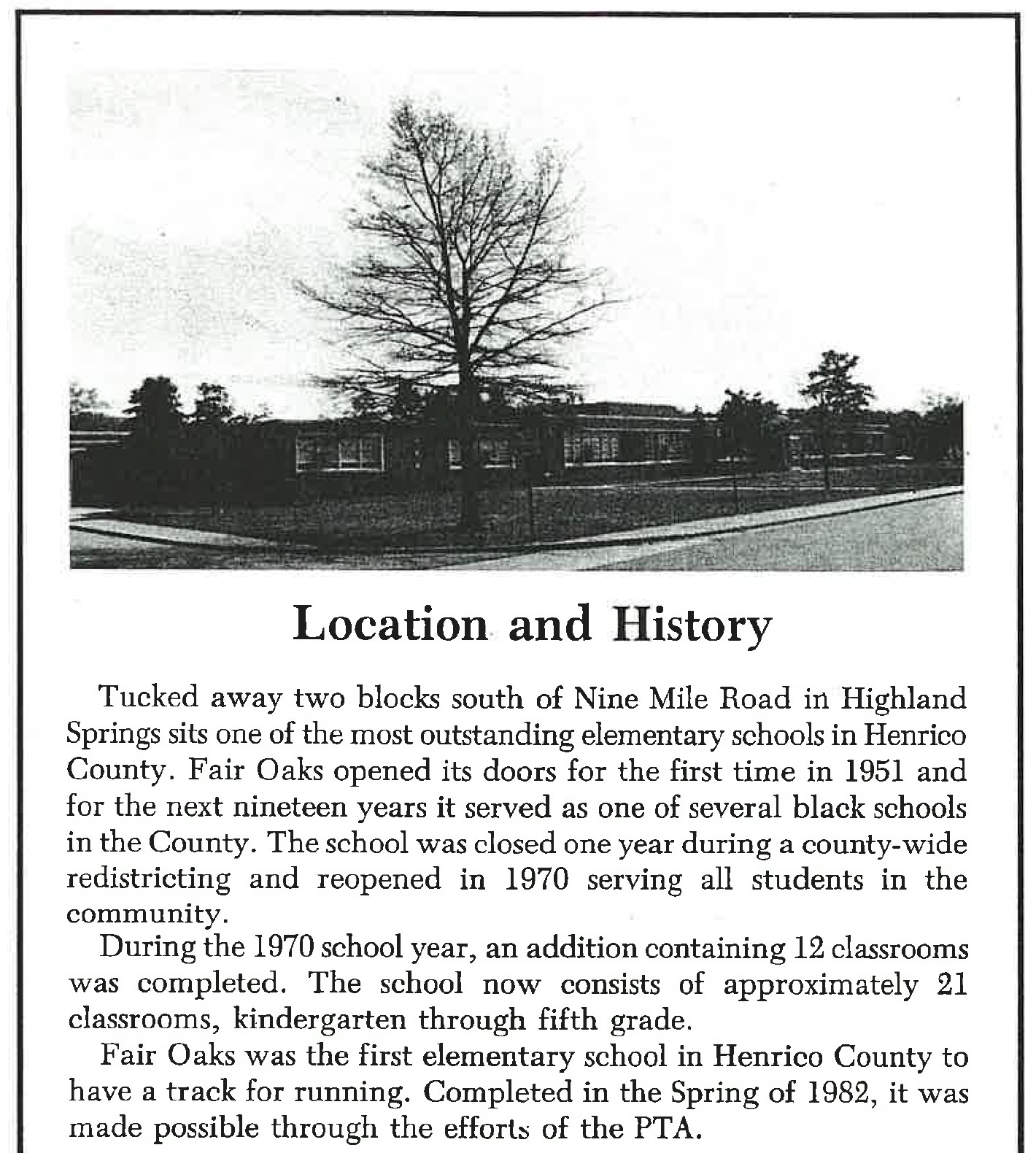
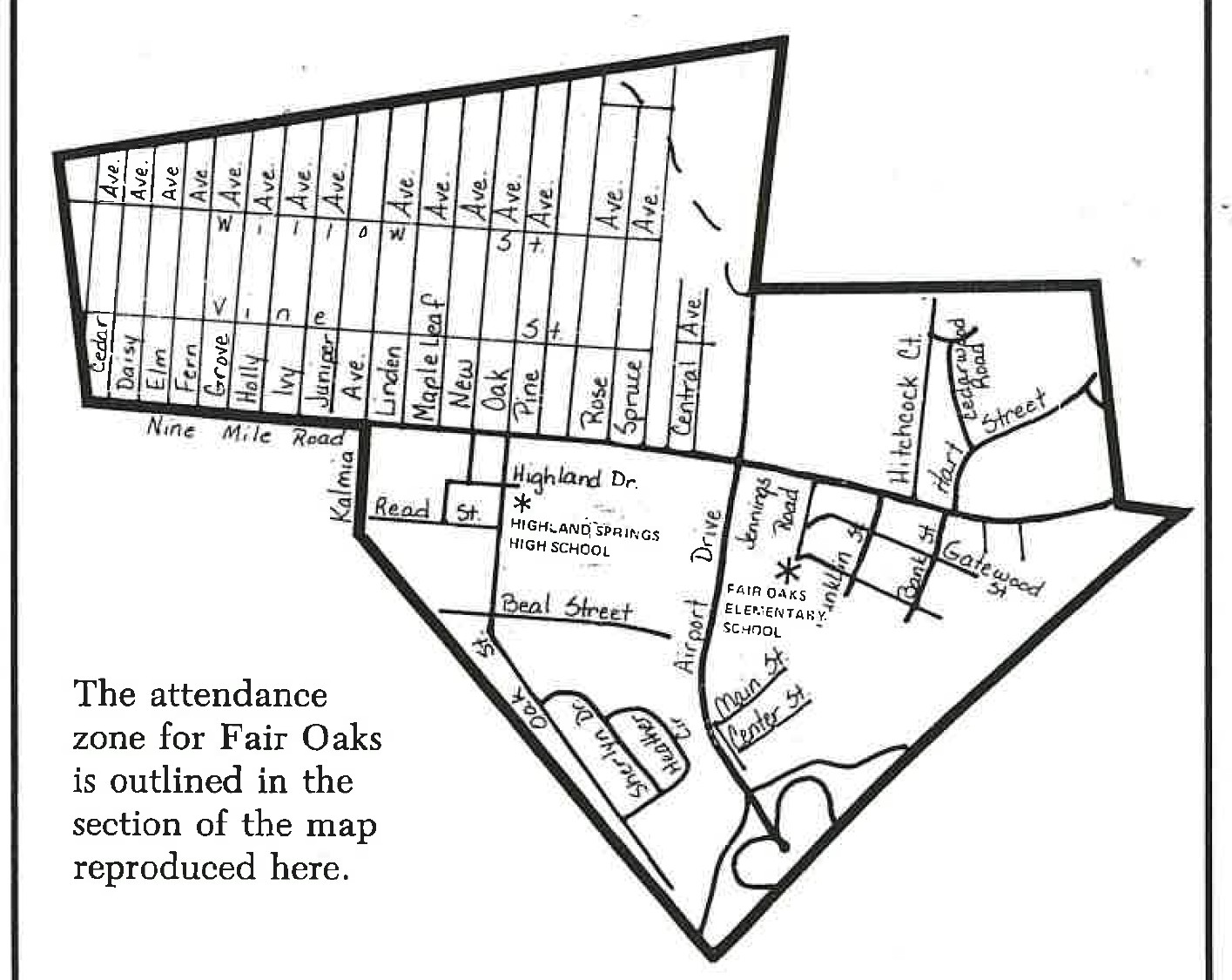
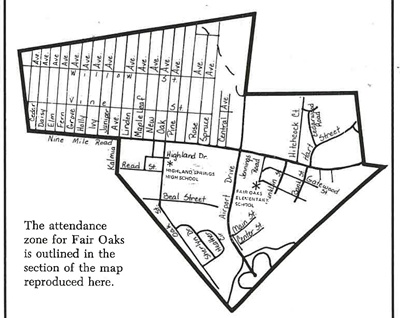
A historical brochure about Fair Oaks Elementary School included the attendance zone.
The same brochure included information about Fair Oaks Elementary School, which provided and continues to provide excellence in its community.
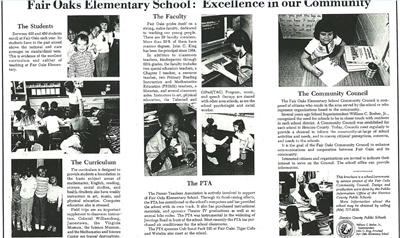
Enlarged images from the entire historical brochure about the school are found via the links below.
In 2026, the Government of Virginia introduced Virginia House Resolution (HR465) in March 2026. It commends Fair Oaks Elementary School for its 100 years of service to the community!
Happy 100th Anniversary, Fair Oaks Elementary School!
>Back to Top<
Mankin Mansion

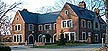
This structure was built by Edward T. Mankin in 1924. Mankin dedicated his home to his son, Irvin, who was killed in World War I. An inscription in the wood flooring of the main hall states "Irvin Place". E. T. Mankin died July 8, 1951. He established a brickwork operation at this location, which operated until shortly after his death. Mankin produced bricks for the Colonial Williamsburg restoration project during the 1930's as well as for Hudson River mansions and large residences on Monument and Chamberlayne Avenues in Richmond, Virginia. The hive-like brick kilns have been demolished. The main house is surrounded by the remains of a brick-walled formal English garden. Dependencies on the estate include an attached Carriage House, Farmer's Cottage, Summer House and a three-unit garage. This Georgian Revival estate is one of fourteen significant National and State Registered Historic Properties located in Henrico County.
- Wedding Resort and Bed & Breakfast.
- (County of Henrico)
>Back to Top<
Mechanicsville School
The name of Glen Lea Elementary School is over 100 years old! It's beginnings as a school, however, harkens back further to 1876.
On March 18, 1876, a one-room schoolhouse on Harvie Road opened. The room was 24' by 36'. The School Board paid $62.50 to John Wright for the land. The School was named the Mechanicsville School.
In September, 1908, a new school on Mechanicsville Turnpike opened. The new school was much bigger; it had six classrooms, an auditorium, office, sewing room, basement, and central heat. A neighborhood contest was held to name this new school. "Glen Lea" was the winning entry. It was assumed that the name came from the farm named Glen Lea. An image and information about the 1908 building are below.


In just a few years, the student population outgrew the school building erected in 1908. In 1946, it was replaced by Glen Lea Elementary School on Austin Avenue, where elementary students still attend today.
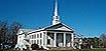
The Glen Lea building, pictured above, on Mechanicsville Turnpike built in 1908 has since been demolished. The original one-room schoolhouse from 1876 is next to and owned by the Gospel Baptist Church. Below is the Church-owned structure as it appears today. The entrance of the original one-room is on the left-gabled end of the red brick structure, and the Church added to the original building over time.

>Back to Top<
Fairfield Sites: All Sites
Brook Hill | Enerdale | Fair Oaks School | Mankin | Mechanicsville School
Home | Maps | Genealogy | Preservation | News | Membership | Shopping | HCHS
|